
How oversimplified climate metrics are failing food policy

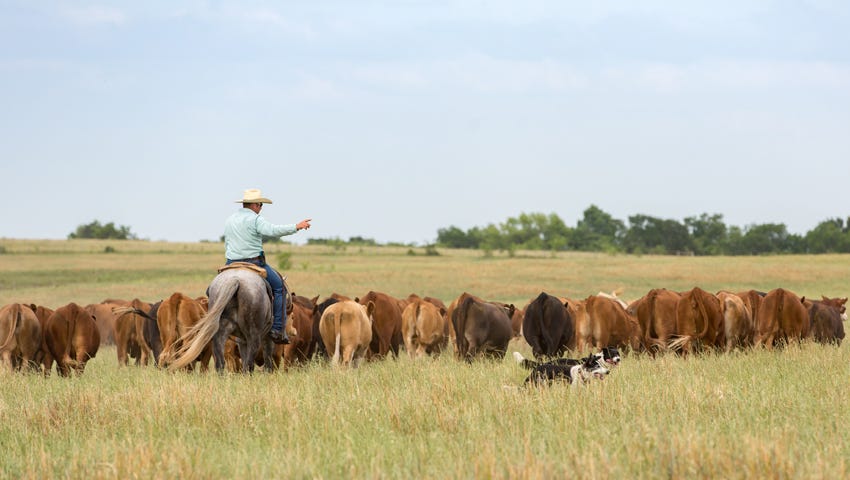
A new research paper co-authored by twelve scientists argues that anti-livestock and anti-meat perspectives oversimplify the environmental challenges facing food systems, ignore regional variation, rely on unbalanced carbon accounting, and discount the critical role of well-managed ruminants in delivering climate adaptation, biodiversity, and nutritional security.
The paper — Carbon Tunnel Vision and Sustainable Meat Production in the West: A Disproportionate Focus on Dietary Greenhouse Gas Emissions — calls for a fundamentally broader framework for evaluating livestock’s place in sustainable food systems.
The reductionist trap
The term “carbon tunnel vision” did not originate with the paper’s authors — it was coined around five years ago by a scientist at Delft University — but it captures precisely the problem they are tackling. The risk, as Leroy explains, is that we confuse the metric with reality.
“If you use a single metric for complex systems, you end up being reductionist,” he says. “Sustainability needs to be understood within a broader framework — people, prosperity, planet. You cannot have a prosperous humanity without factoring in environmental health, but equally, if you neglect human well-being, you get a carbon multiplication effect. Poor public health is itself a carbon multiplier.”
The narrowing of the sustainability debate to carbon alone has practical consequences. Since the FAO’s landmark Livestock’s Long Shadow report (2006), policy has pushed hard for intensification as the route to emissions efficiency.
But optimising for a single metric generates trade-offs that don’t always move in the same direction. Reducing emissions through intensification can worsen biodiversity loss, eutrophication, and soil health — while the carbon accounting itself remains far more complex than simply summing CO₂ equivalents.
Why has policy become so single-minded? Leroy points to a structural dynamic: we focus on what we can measure easily, and carbon became the dominant metric. “The more scientists live in ivory towers and don’t come out to see actual countryside and food systems,” he says, “the more you get abstraction.” There could also, he suggests, be a financial motivation: because carbon can be quantified, it can be monetised. It became the engine for financial instruments and market-based approaches to nature, crowding out more complex dimensions like biodiversity that resist easy commodification.
The problem with global averages
Rowntree addresses a related distortion: the use of global livestock emissions averages that flatten enormous farm-level variation and have allowed livestock to be over-emphasised relative to fossil fuels in public and policy discourse.
“Every farm, every ranch has a very unique DNA,” he says. “Half of our terrestrial lands are some form of grassland — savannah, shrubland — and that adds considerable complexity to global averages.”
The standard argument for reducing the footprint of beef production globally is to increase productivity, which dilutes the emissions denominator. But Rowntree argues this gets pushed aside, partly because in developing countries it also directly improves food security and resilience — arguments that don’t fit neatly into carbon-centric frameworks.
His preferred analytical lens is what he calls a “complex fraction”: productivity in the numerator, emissions in the next denominator, balanced by ecological outcomes — water, biodiversity, energy — with the whole expression anchored to the individual farm or ranch footprint. “That’s the only way we can truly assess what we’re doing in a way that is fair to the farmer, fair to the food system, and doesn’t pick winners or losers because of policy.”
Whether such granularity can be translated into workable policy is another question. Rowntree points to the Australian Carbon Credit Unit scheme as a partial model — outcome-driven rather than input-subsidised, incentivising improved productivity and emissions reductions through measurable results, with regulatory oversight to maintain integrity. He is cautious about its limits but sees it as evidence that better approaches are possible.
What animal foods actually provide
One of the paper’s central arguments is that nutrition has been almost entirely absent from environmental assessments of livestock — or, when included, reduced to crude calorie and protein comparisons that miss most of what matters.
Leroy is direct: “There’s been a lot of gaslighting about being able to get all those nutrients from plant foods. Theoretically, yes. But in reality, things are much more complicated.”
The debate is rarely about calories — livestock is not calorie-efficient, given trophic energy losses — but calories are a poor measure of nutrition in any case. “If you just want calories, grow sugar and oil. Efficient, but lousy nutrition.” Protein is sometimes assessed, but usually as crude protein without accounting for quality. Vitamins, minerals, and other bioactive compounds are almost never considered.
Animal source foods, Leroy argues, provide dense packages of specific nutrients — high-quality protein, retinol, B12, long-chain omega-3 fatty acids, iron — in forms that are highly bioavailable. The body has to convert plant precursors into these compounds, and individuals vary enormously in how efficiently they do so. Those with poor conversion capacity for beta-carotene to retinol, or ALA to EPA and DHA, face significant nutritional risk on plant-heavy diets. Even committed vegans who supplement typically take B12, iodine, vitamin K2, omega-3 fatty acids, and often iron.
Vulnerable groups face the greatest risk: young children, pregnant women, older adults, and those with metabolic challenges. “We should not make it harder on them by throwing away foods that are actually very nourishing,” Leroy says.
Rowntree adds a dimension from his own research: nutrient density within beef varies substantially based on feeding system. Grass-fed beef, for example, is high in vaccenic acid (a conjugated fatty acid with demonstrated anticarcinogenic properties), while grain-finished beef carries high concentrations of monounsaturated fats. “We don’t really think about these nutrients, and we haven’t measured the real health impacts they have,” he says.
The broader context matters too. Leroy is not arguing that Western diets don’t need to change — he agrees that ultra-processed foods, fast-food culture, and nutrient-poor dietary patterns are a genuine problem. But he is sceptical of the framing that reducing meat is the primary lever. “We are already mostly plant-based. About 30% of calories come from animal foods, 70% from plants. The problem is that the 70% is mostly starches, oils, and sugar.” The priority should be improving diet quality across the board, not reducing animal foods per se.
How much can dietary shift the carbon needle?
The paper addresses directly what is perhaps the most politically sensitive question: if an average Western individual moved from a meat-containing to a fully plant-based diet, how much would it reduce their greenhouse gas emissions?
Leroy’s answer is considerably more modest than mainstream environmental advocacy suggests. A typical Western individual might generate 10–15 tonnes of CO₂-equivalent per year depending on country. Of that, dietary emissions might account for 1.5–2 tonnes. Transitioning to a plant-based diet would yield a saving of roughly 0.2–0.8 tonnes — perhaps 2% of total footprint as a flexitarian, or up to 6% as a committed vegan. That’s not nothing, but, as Leroy points out, “If you hear people like Marco Springmann saying dietary change is the biggest thing you can do for the climate — it’s not.”
And the 6% figure comes with conditions. It requires permanent dietary change — one year of veganism “will not register”. Around 80% of people who adopt vegan or vegetarian diets return to omnivorous eating within months. “If you’re just going to cut out your meat or become a flexitarian and halve it, you will not have a very substantial effect. The entire year of dietary change will be obliterated by a single flight.”
These figures also reflect only emissions, excluding nutritional trade-offs, the ecological co-benefits of extensive grazing systems, carbon drawdown, and the complexities of methane accounting that Leroy and Rowntree discuss later in the conversation.
The overlooked value of co-products
Standard lifecycle emissions accounting assigns all livestock emissions to the primary retail product — meat or dairy. Co-products, which can represent a significant fraction of the animal’s total value, are largely excluded.
Leroy acknowledges this is methodologically complex: how do you allocate emissions between a food product and a pharmaceutical by-product? Whether you use economic value, mass allocation, or nutritional value produces very different answers. But the effect is significant. Research from Robin Alder’s group in Australia found that the liver of a lamb alone contains more retinol, folic acid, and B12 than the entire carcass and all other co-products combined. Wool, hides, bone meal, manure, pharmaceutical and cosmetic derivatives — when the full range of co-products is properly accounted for, the picture changes materially.
“It shouldn’t only be put on the shoulders of the food system,” Leroy says.
Getting methane accounting right
Perhaps the most technically important section of the paper concerns methane. GWP100 — the standard 100-year global warming potential metric — treats methane as roughly 28–34 times more warming than CO₂ over a century, which significantly inflates the apparent climate impact of stable or slowly declining livestock herds. GWP*, developed by Myles Allen’s group at Oxford from 2018 onwards, more accurately captures the actual warming behaviour of short-lived flow gases: stable methane emissions from a constant herd size contribute approximately zero additional warming, while declining herds represent a net cooling effect.
Leroy describes GWP* as having “clear advantages,” and notes that scientific consensus is shifting toward dual reporting — GWP100 alongside GWP* — for a more complete picture. But he is careful not to present it as a free pass for the sector. “If we increase emissions, we have a huge problem, even more than with the conventional system. It just means that if we manage a sustainable transition to lower emissions, we see the benefits in line with reality.” He also acknowledges significant remaining uncertainty around atmospheric methane kinetics — hydroxyl radical dynamics, local sink effects — that means the full picture is still being worked out.
Rowntree adds complexity from his farm-level data. His team has measured individual cow methane for over a decade at their Michigan State ranch, matched to weaning weight records. What he finds is that more biologically efficient cows — those that wean a higher proportion of their own bodyweight — routinely emit 20–30% less enteric methane as individuals. The answer, he says, may not be fewer cows, but more cows that are appropriately matched to their environment, because each incremental productivity gain carries a lower methane intensity.
“If we don’t take that entire complex fraction, we may be getting less efficient, bigger animals because we’re trying to fill a gap on a per-head basis,” he says.
There has been resistance to GWP* from unexpected directions.
Environmental NGOs and outlets including the Guardian attacked it vigorously in its early years. But farming unions, including the NFU in the UK, were also initially resistant — perhaps because GWP* also reveals the warming power of increasing herd sizes, a signal the sector was not always comfortable acknowledging. The NFU has since accepted it, but Rowntree and Leroy see the episode as illustrative of a broader problem: metrics become politically charged, and all sides can resist honest accounting when it threatens their preferred narrative.
Sequestration, rewilding, and the pastoral baseline
The paper’s treatment of carbon sequestration is shaped substantially by the work of co-author Pablo Manzano, whose research challenges the framing that rewilding is categorically better than managed pastoral grazing.
Manzano has compared emissions from land under pastoral management with adjacent land in a natural, ungrazed state in several pastoral regions including East Africa. The emissions from both were so similar that he was concerned about submitting the paper — worried the results would be seen as fabricated.
The implication is significant: much of what gets attributed to livestock as anthropogenic emissions should, in extensive pastoral systems, be compared against a natural baseline that itself generates substantial emissions. “If you take out livestock and bring in wild nature, in that baseline situation, the anthropogenic side needs to be relativised,” Leroy says.
This cuts against the FAO’s historical emphasis on intensification — and against the activist argument that extensive, grass-fed systems are the worst form of livestock production. When ecological context is accounted for, extensive pastoralism looks very different from feedlot systems, and the global 12% livestock emissions figure is, on this reading, a significant overstatement.
The paper notes that Western livestock systems contribute roughly 2.6% of global emissions; the remainder comes disproportionately from pastoral systems whose anthropogenic contribution is unclear without an appropriate natural baseline.
Rowntree brings his own sequestration data. At his Michigan State grazing operation, a decade of measurement following the adoption of adaptive management practices found sequestration of close to 2 metric tonnes of carbon per hectare per year in actual soil carbon metrics — a result that “kind of freaks people out when it doesn’t match what’s existing in the literature.” Running the most conservative available models brought the figure to above 0.5 tonnes per hectare — still enough to offset between 30% and 40% of the footprint of either grass-fed or grain-fed beef production.
He also argues against single-solution thinking about land use. Through Michigan State’s Landscape Intelligence Network, his team is working across forestry, ecology, and livestock science to identify the best use for each parcel of land — recognising that silvopasture, agroforestry, grazing land, and cropland can all be part of the answer. “A kernel of corn, a soybean, a pound of beef — they’re just outputs. We need to look at how we produce those outputs, not pit them against each other.”
Funding, bias, and the politics of expertise
Both researchers have faced attacks linking their work to industry funding. Leroy is unequivocal: his income from the livestock industry is zero.
He is one of the founders of the Dublin Declaration — a statement signed by over 1,300 scientists calling for a nuanced, evidence-based approach to livestock sustainability, which critics have tried to delegitimise by claiming that a majority of signatories have industry links. He notes that even those with legitimate academic partnerships with industry — like Frank Mitloehner at UC Davis, whose contractual duties explicitly include working with livestock producers — are mischaracterised as being paid advocates.
“From the moment you touch upon meat, it seems like a taboo thing that is contaminating you and corrupting you,” Leroy says. “Whereas we’re talking about one of the most nutritious foods on the planet.”
He traces the volume and reach of media attacks to a surprisingly small network: a handful of journalists working consistently with a handful of preferred scientists, creating the impression of broad scientific consensus for positions that the wider scientific community does not hold. The Dublin Declaration’s 1,300+ signatories — carefully screened to exclude industry scientists without academic affiliation — represent a rather different picture of where scientific opinion actually sits.
Context, complexity, and the mosaic of solutions
The paper’s conclusions resist the drive toward single solutions. The world’s food systems are too varied, and the land too ecologically diverse, for any one approach to work everywhere.
What is needed is a mosaic: different systems, different metrics, different interventions appropriate to different contexts, held together by common principles aimed at improving human well-being and natural resilience.
“The world is not a computer game,” Leroy says. “It’s not a virtual scenario where you just plug and unplug things and simulate at will without repercussions of reality hitting you in the face.”
For Rowntree, the practical implication is that policy needs to shift from rewarding simple input metrics — yield per acre, head count — toward ecological outcome payments that account for the full complexity of what farms produce: food, carbon storage, water cycling, biodiversity, and resilience. He sees precedents in Australia’s ACCU system, in precision agriculture tools that can map yield stability at sub-field scale, and in the regenerative agriculture movement’s growing body of empirical results.
The paper’s core argument is not a defence of the status quo in livestock production. It is an argument for honesty: about what the evidence actually shows, about how complex the interactions are, and about the damage done when single metrics — whether wielded by those who want to expand livestock systems or by those who want to eliminate them — substitute for genuine engagement with that complexity.
This article is based on a Farm Gate podcast conversation with Dr Frédéric Leroy, professor of food science and biotechnology at Vrije Universiteit Brussel, and Dr Jason Rowntree, professor of animal science at Michigan State University.
Read the associated research, Carbon Tunnel Vision and Sustainable Meat Production in the West: A Disproportionate Focus on Dietary Greenhouse Gas Emissions